
Auburn Bankruptcy Records
Auburn bankruptcy records are filed with the U.S. Bankruptcy Court for the Western District of Washington, which handles all federal bankruptcy cases for King County residents. Auburn sits in south King County, and filers here use the Seattle courthouse at 700 Stewart Street. You can search existing cases through PACER, the federal courts' online access system, or call the Voice Case Information System for free status updates any time of day. This page covers how to find those records, what each bankruptcy chapter involves, and where to get legal help in the Auburn area.
Auburn Overview
Federal Bankruptcy Court for Auburn
Auburn residents file bankruptcy cases in the U.S. Bankruptcy Court for the Western District of Washington. This federal court handles all bankruptcy petitions, which means the process runs through federal law, not state court. The court has two locations: Seattle and Tacoma. Auburn filers most often use the Seattle courthouse, though the Tacoma location is also within reach for south King County residents.
Bankruptcy is a federal matter. That means the King County Superior Court does not hear bankruptcy cases. However, King County court records can still be relevant if you are dealing with related civil judgments, foreclosures, or family law issues that overlap with your bankruptcy case. The two systems operate separately but can affect each other.
| Court | U.S. Bankruptcy Court, Western District of Washington |
|---|---|
| Seattle Address | 700 Stewart Street, Suite 6301 Seattle, WA 98101 |
| Tacoma Address | 1717 Pacific Avenue, Suite 2100 Tacoma, WA 98402 |
| Phone | (206) 370-5200 (Seattle) | (253) 882-3900 (Tacoma) |
| Website | wawb.uscourts.gov |
The court's website at wawb.uscourts.gov has filing guides, local rules, and forms specific to the Western District. If you are not sure which location to visit, call the Seattle number and they can direct you. Both offices maintain the same case records.
King County Superior Court Records
While bankruptcy itself is federal, King County Superior Court holds records that often connect to financial distress cases. Civil judgments, wage garnishment orders, and lien filings all run through the Superior Court. If a creditor sued someone before or after a bankruptcy filing, that case would be in the county court. Auburn residents can search those records through the King County Script Portal or visit the clerk in person.
South King County cases, including those from Auburn, may be handled at the Maleng Regional Justice Center in Kent. That facility is at 401 4th Ave N, Kent, WA 98032, which is closer for many Auburn residents than the main Seattle courthouse. The King County Clerk's office there can assist with Superior Court record requests.
| Office | King County Superior Court Clerk |
|---|---|
| Seattle Address | 516 Third Ave, Room E-609 Seattle, WA 98104 |
| Kent Address | 401 4th Ave N Kent, WA 98032 |
| Phone | (206) 296-9300 |
| Website | kingcounty.gov/courts/clerk |
The Auburn Municipal Court at 10 N. Division Street, Auburn, WA 98001 handles local infractions and misdemeanors. You can reach them at (253) 931-3042 or visit auburnwa.gov. That court does not handle bankruptcy filings, but it may have records related to traffic matters or low-level offenses that appear in background checks alongside financial records.
The King County Script Portal at dja-prd-ecexap1.kingcounty.gov lets you search cases by name or case number. It covers filings from November 1, 2004 onward. Copy fees are $0.25 per page for non-certified online copies. Certified copies cost $5 for the first page and $1 for each additional page.
The screenshot below shows the Auburn Municipal Court website, which provides contact details and local court information for Auburn residents.
Source: auburnwa.gov
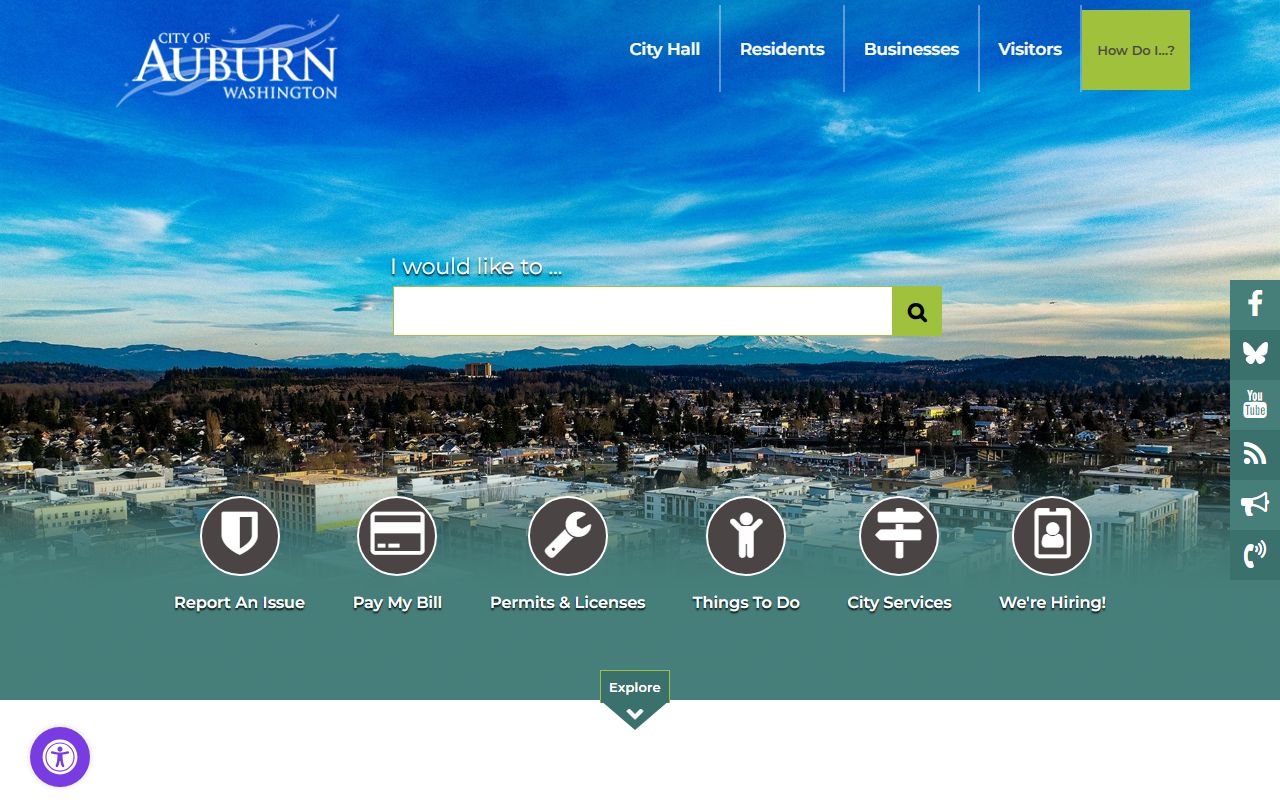
The municipal court page lists local contact information and services relevant to Auburn residents handling legal matters.
How to Search Auburn Bankruptcy Records
There are three main ways to search bankruptcy records for Auburn filers. PACER is the primary federal system. VCIS is the free phone alternative. And for related state court records, the King County portals and statewide Washington Courts search tool all help round out the picture.
PACER stands for Public Access to Court Electronic Records. It is the federal government's system for accessing court records across all federal courts, including bankruptcy. You can search by name, case number, or Social Security number (last four digits only). PACER is available at pacer.uscourts.gov. You will need to register for a free account. Searches cost $0.10 per page, but the fee is waived if you spend less than $30 in a quarter. That means most casual searches cost nothing. You can also call PACER's help line at 800-676-6856 during business hours.
VCIS is the Voice Case Information System. Call 866-222-8029 any time, day or night, and the automated system reads back case details. It is free. You just need the debtor's name or case number. VCIS gives you basic status information: case type, filing date, trustee name, and whether the case is open or closed. It does not provide full docket details, but it is useful for a quick check.
For Washington state court records, the statewide search tool at dw.courts.wa.gov covers Superior Court cases across all counties. The Washington Digital Archives at digitalarchives.wa.gov holds older historical records. The Odyssey Portal at odysseyportal.courts.wa.gov covers courts that use the Odyssey case management system.
The image below shows the King County Superior Court case search portal, which Auburn residents can use to look up related civil judgments and lien records.
Source: kingcounty.gov/courts/clerk
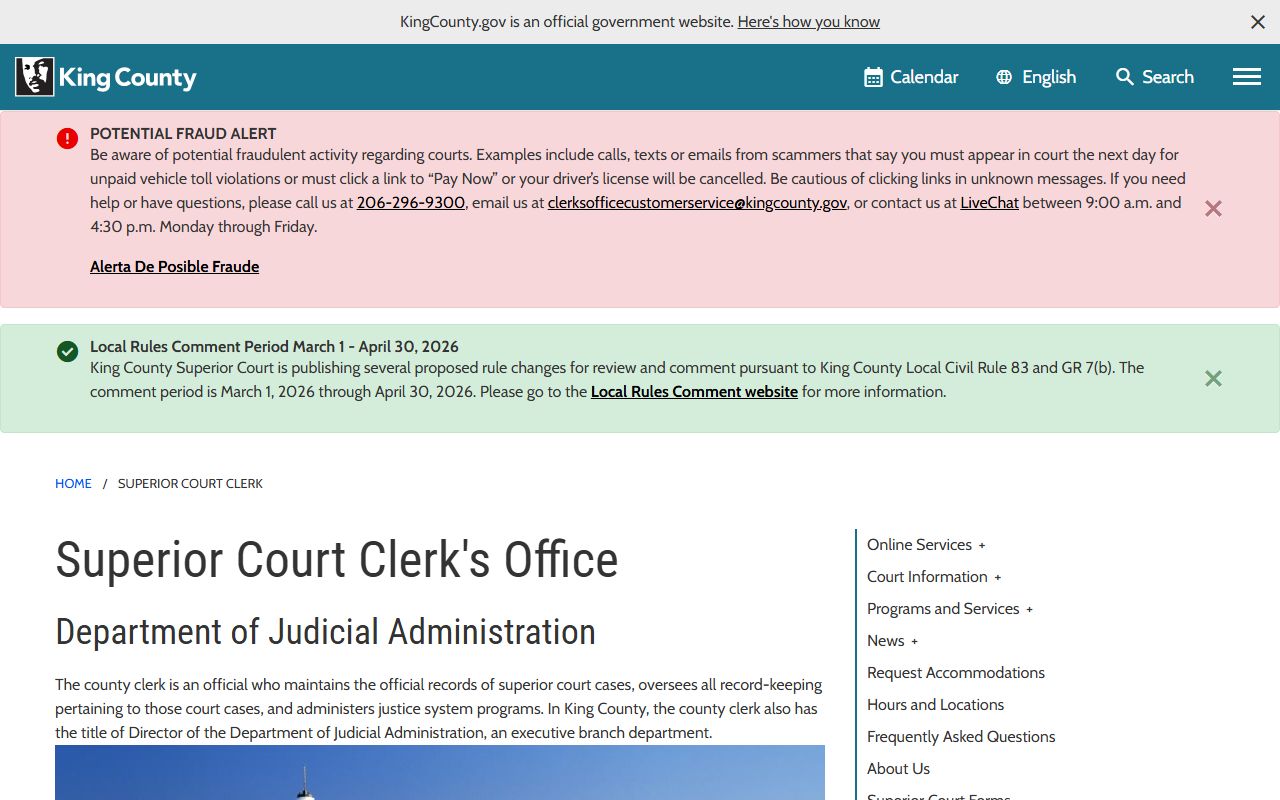
The King County clerk search portal displays case status and docket information for civil filings that may accompany bankruptcy proceedings.
Bankruptcy Chapters and Filing Fees
Federal law provides several types of bankruptcy, each designed for different financial situations. Auburn residents most often file Chapter 7 or Chapter 13. Chapter 11 and Chapter 12 apply in more specific circumstances. The filing fee varies by chapter and is paid to the federal bankruptcy court at the time of filing.
Chapter 7 is the most common type. It is called a liquidation bankruptcy. A trustee reviews your assets and may sell non-exempt property to pay creditors. Most Chapter 7 cases for individuals with limited assets result in a discharge with no property sold. The filing fee is $338. You must pass the means test to qualify, which compares your income to the state median. Washington's median income figures are updated periodically, so check the current numbers with the court or an attorney before filing.
Chapter 13 lets you keep your property and repay debts through a three-to-five year payment plan. This works well if you have regular income and want to save a home from foreclosure or catch up on car payments. The filing fee is $313. The court must approve your repayment plan, and you must stick to it for the full term. If you complete the plan, remaining eligible debts are discharged.
Chapter 11 is primarily for businesses reorganizing debt, though individuals with very high debt loads sometimes use it too. The filing fee is $1,738. Chapter 12 is designed for family farmers and family fishermen with regular annual income. The filing fee is $278. Both are far less common than Chapter 7 and 13 for Auburn residents.
If you cannot pay the filing fee upfront, Chapter 7 filers may ask to pay in installments or request a fee waiver based on income. Fee waiver eligibility depends on household size and income relative to the poverty guidelines. Chapter 13 filers cannot get fee waivers but may be able to pay in installments with court approval.
Washington State Bankruptcy Exemptions
Washington allows bankruptcy filers to protect certain property from creditors using state exemptions. These exemptions determine what you get to keep when you file. Washington does not allow filers to use the federal exemption system, so you must use Washington's exemptions. Two key statutes govern this: RCW 6.15 covers personal property exemptions, and RCW 6.13 covers the homestead exemption.
Under RCW 6.15, you can protect up to $3,500 in household furnishings and goods. The vehicle exemption covers up to $15,000 in equity in one motor vehicle. Tools, equipment, and materials used in your trade or business are protected up to $15,000. There is also a $10,000 wildcard exemption that can be applied to any personal property of your choosing. These amounts apply per person, so married couples filing jointly may be able to double some exemptions.
The homestead exemption under RCW 6.13 is notable. Washington ties the homestead exemption to the median sale price of a single-family home in your county. For King County, that figure is significant and changes with the housing market. This means many Auburn homeowners can protect substantial equity in their primary residence when filing bankruptcy. The exemption applies automatically to your principal residence. You do not need to file a homestead declaration in Washington, though doing so can help establish the protected date.
Other exemptions cover retirement accounts, Social Security benefits, unemployment compensation, child support payments, and life insurance proceeds. Most retirement accounts are fully exempt under federal law regardless of state rules. Getting the exemptions right matters a lot. An attorney familiar with Western District practice can help you maximize what you keep.
Legal Help in Auburn
Filing bankruptcy without a lawyer is possible but carries real risk. The Western District of Washington has local rules that trip up filers who are not familiar with federal procedure. Several organizations in and around Auburn offer free or low-cost legal help for people dealing with debt and bankruptcy.
The King County Bar Association runs free 30-minute legal clinics at 34 locations across King County. These clinics cover debt and bankruptcy questions. Call (206) 267-7070 or visit kcba.org to find a clinic near Auburn. The Bar Association also has a lawyer referral service if you need ongoing representation.
CLEAR is the statewide legal aid intake line. In King County, dial 211 or call 888-201-1014. CLEAR can connect you with Northwest Justice Project, which handles civil legal matters for low-income residents including bankruptcy-related issues. Visit nwjustice.org to learn about eligibility and services. The Office of Civil Legal Aid also maintains a list of legal help providers at ocla.wa.gov.
The Washington State Bar Association's public directory at wsba.org lets you search for licensed attorneys by practice area and location. Look for attorneys who list bankruptcy or debt relief as their focus. Many offer a free first consultation so you can understand your options before committing.
The National Archives at Seattle holds older federal court records that are no longer active online. Their address is 6125 Sand Point Way NE, Seattle, WA 98115-7999, and you can reach them at (206) 336-5132. Their website is archives.gov/seattle. For older Auburn bankruptcy cases that have been archived, this is where to look.
King County Bankruptcy Records
Auburn is in King County. All bankruptcy filings for Auburn residents go through the Western District court, but county-level civil records and related filings are handled by King County Superior Court. For more on the county court system and additional search tools, visit the King County bankruptcy records page.
Nearby Cities
These cities near Auburn also file bankruptcy cases through the Western District of Washington.