
Seattle Bankruptcy Records
Seattle bankruptcy records are federal court records filed through the U.S. Bankruptcy Court for the Western District of Washington, which is located in downtown Seattle. Seattle is the seat of King County and home to roughly 750,000 residents, making it the largest city in Washington State. Whether you need to look up a case, find a debtor, or get copies of filed documents, Seattle is actually one of the easiest places in Washington to access bankruptcy records because the court itself is right here in the city.
Seattle Overview
Which Court Handles Seattle Bankruptcy Cases
Seattle is in King County, which falls under the U.S. Bankruptcy Court for the Western District of Washington. That court is located at 700 Stewart Street in Seattle. It is the office where all bankruptcy petitions from Seattle residents and businesses are filed. Hearings and meetings of creditors for Seattle cases are typically scheduled there as well.
The Western District handles cases from all counties west of the Cascades, including King, Pierce, Snohomish, Kitsap, and many others. The Seattle courthouse is the main location; a second courthouse in Tacoma serves Pierce County cases. For Seattle residents, the courthouse is generally convenient, and in-person access is straightforward. The court's website at wawb.uscourts.gov covers all filing requirements, local rules, and approved service providers.
The screenshot below shows the Western District of Washington Bankruptcy Court website, the central resource for Seattle bankruptcy filings and public records access.
All Seattle and King County bankruptcy case filings go through wawb.uscourts.gov, which also links to PACER for online case searches.
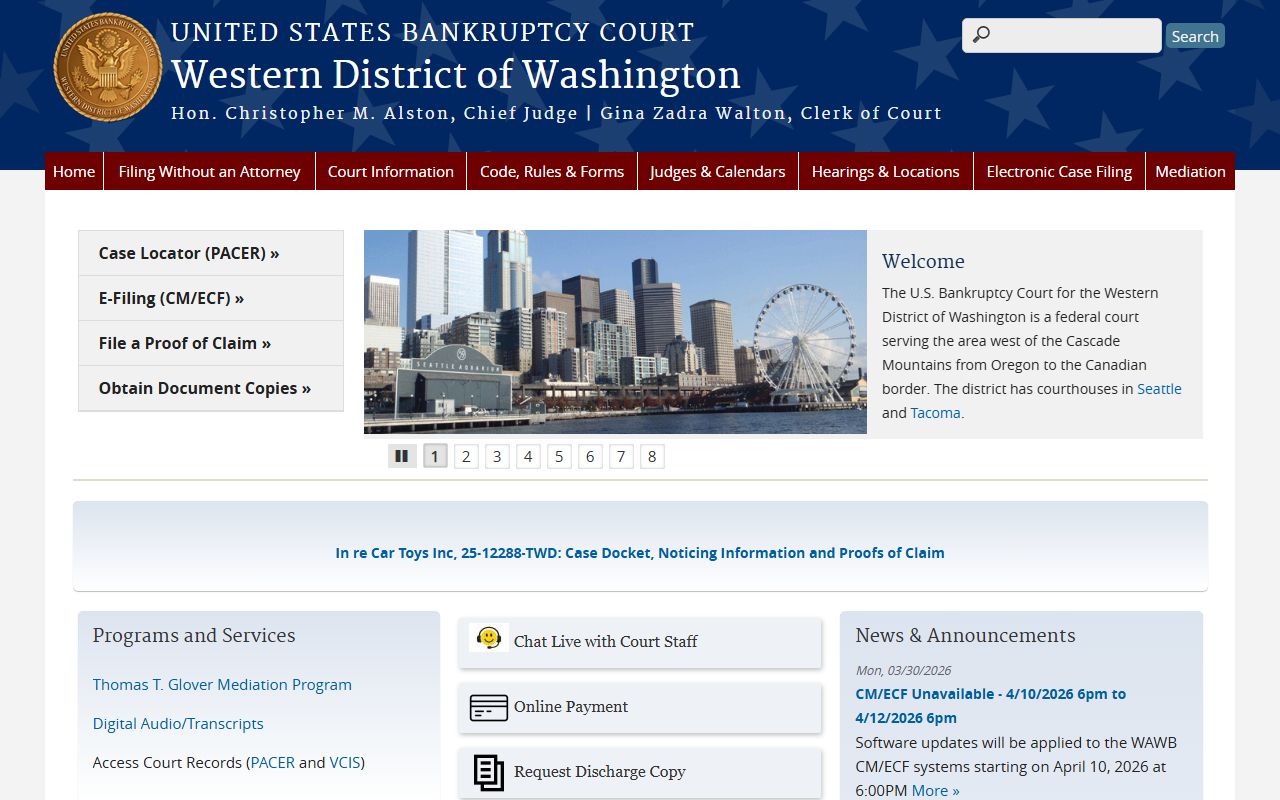
This site is where Seattle residents file petitions, look up case status, and find trustee information for active bankruptcy proceedings.
| Court | U.S. Bankruptcy Court, Western District of Washington |
|---|---|
| Address | 700 Stewart Street, Room 6301, Seattle, WA 98101 |
| Phone | (206) 370-5200 |
| Hours | Monday through Friday, 8:30 AM to 4:30 PM |
| Website | wawb.uscourts.gov |
| County Page | King County Bankruptcy Records |
How to Search Seattle Bankruptcy Records
The two primary tools for searching bankruptcy cases filed by Seattle residents or businesses are PACER and VCIS. Both access the same federal court database. PACER charges per page viewed; VCIS is free by phone.
PACER, the Public Access to Court Electronic Records system, is the standard tool for federal courts nationwide. Register for a free account at pacer.uscourts.gov, or call 800-676-6856 for help. Once logged in, select the Western District of Washington and search by debtor name, case number, or the last four digits of a Social Security number. Each page you view costs $0.10, capped at $3.00 per document. If your total quarterly charges stay under $30, the fees are waived. For a complete case history, full dockets, and access to filed documents, PACER is the right tool. The Seattle courthouse also has public terminals in the lobby if you prefer to search in person without a personal account.
VCIS, the Voice Case Information System, is a free phone line available 24 hours a day, seven days a week. Call 866-222-8029. No account is needed. Search by debtor name or case number and get back the case number, filing date, chapter type, debtor name, trustee, and current status. Takes about two minutes per call. For a quick status check on a single case, VCIS is often the fastest approach.
The King County Superior Court Clerk maintains state court records at two locations: the King County Courthouse at 516 Third Avenue in downtown Seattle and the Norm Maleng Regional Justice Center in Kent. The Clerk's online portal at kingcountycourt.us provides access to civil, criminal, family law, and probate records filed after November 1, 2004. These are not bankruptcy records, but civil judgments, liens, and property matters from the state court system often intersect with bankruptcy cases. The Washington Courts name search tool at dw.courts.wa.gov also covers statewide Superior Court records.
The screenshot below shows the King County Superior Court records portal, which is useful for researching state court judgments and property liens connected to Seattle bankruptcy cases.
The KC Script Portal at kingcountycourt.us gives online access to King County state court records, complementing the federal bankruptcy case data available through PACER.
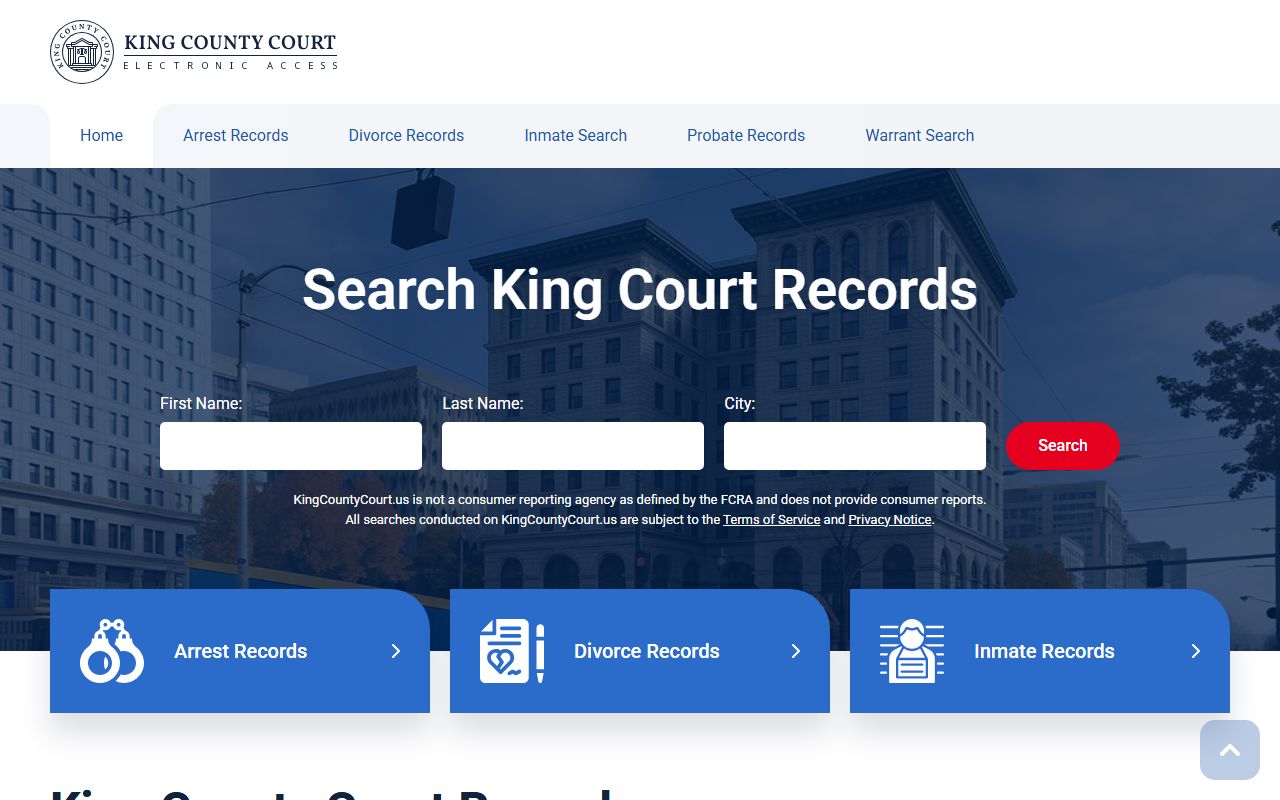
Use this portal to look up civil judgments or property liens connected to a Seattle debtor, which may appear alongside a federal bankruptcy case in PACER.
Bankruptcy Chapters and Filing Fees
Federal bankruptcy law offers several types of relief. Seattle residents file through the Western District court at 700 Stewart Street. The filing fee varies by chapter and is paid to the court clerk when you submit your petition.
Chapter 7 is the most common type. It is a liquidation process where a trustee reviews your assets, may sell non-exempt property to pay creditors, and most remaining unsecured debts are discharged at the end. The filing fee is $338. Most individual Chapter 7 cases in Seattle take about four to six months from filing to discharge. You must pass a means test showing your income is at or below the Washington State median, or that your disposable income is too low to fund a repayment plan.
Chapter 13 lets individuals with regular income keep their property while repaying debts over a three-to-five-year court-approved plan. The filing fee is $313. It is commonly used by homeowners who are behind on a mortgage and want to stop a foreclosure while catching up on payments. Your secured and unsecured debts must fall within statutory limits to qualify. Chapter 12 is a similar reorganization option for family farmers and fishermen, with a $278 filing fee. Chapter 11 is primarily used by businesses and high-debt individuals whose debts exceed the Chapter 13 limits. The Chapter 11 filing fee is $1,738.
Before you file, you must complete a credit counseling course from a provider approved by the Western District court. After your case concludes but before a discharge is granted, you must also complete a debtor education course. Both can typically be completed online or by phone. The court website lists all approved providers. Fee waivers for these courses are available for filers who qualify based on income.
Washington Exemptions for Seattle Filers
When you file for bankruptcy in Seattle, Washington state law lets you protect certain property from creditors. These are called exemptions. You choose between Washington's state exemptions and the federal exemption system when you file. Washington's state exemptions are generally more favorable for most Seattle filers.
Under RCW 6.15, you can protect up to $3,500 in household goods and furnishings, up to $15,000 in a motor vehicle, up to $15,000 in tools used in your trade or business, and up to $10,000 as a wildcard exemption that can apply to any property. Since July 2023, married couples each get their own full exemption set. That means joint filers in Seattle can protect up to $30,000 in vehicle value and $20,000 in wildcard assets. That doubled protection has made Washington's exemption law notably more useful for couples filing together.
The homestead exemption under RCW 6.13 protects equity in a home you actually live in, up to the median sale price of a single-family home in King County at the time you file. Given Seattle's high property values, this exemption can be substantial. If you own and occupy a home in Seattle, this is likely your most valuable protection when filing for bankruptcy. You must reside in the property for the exemption to apply.
Given Seattle's real estate market, exemption planning before you file is especially important. The amounts you can protect depend heavily on your specific assets and the timing of your filing. Speaking with a licensed bankruptcy attorney before you file is strongly recommended.
Legal Help for Seattle Residents
Seattle has significant legal aid resources. Several organizations offer free or low-cost help to residents who qualify based on income. Getting advice before you file can make a real difference in your case outcome.
The King County Bar Association Pro Bono Services runs Neighborhood Legal Clinics at 34 locations across King County, including clinics that specialize in debt and bankruptcy. To apply, call (206) 267-7070 or submit an intake form online at kcba.org/For-the-Public/Free-Legal-Assistance. Current wait times for Debt and Bankruptcy Clinics are approximately three to five weeks. Over 1,400 volunteer attorneys participate in the program.
The screenshot below shows the King County Bar Association's free legal assistance page, which connects Seattle residents with volunteer attorneys for bankruptcy consultations.
Apply online or by phone at (206) 267-7070 through the KCBA Pro Bono program, which serves low-income residents across King County.
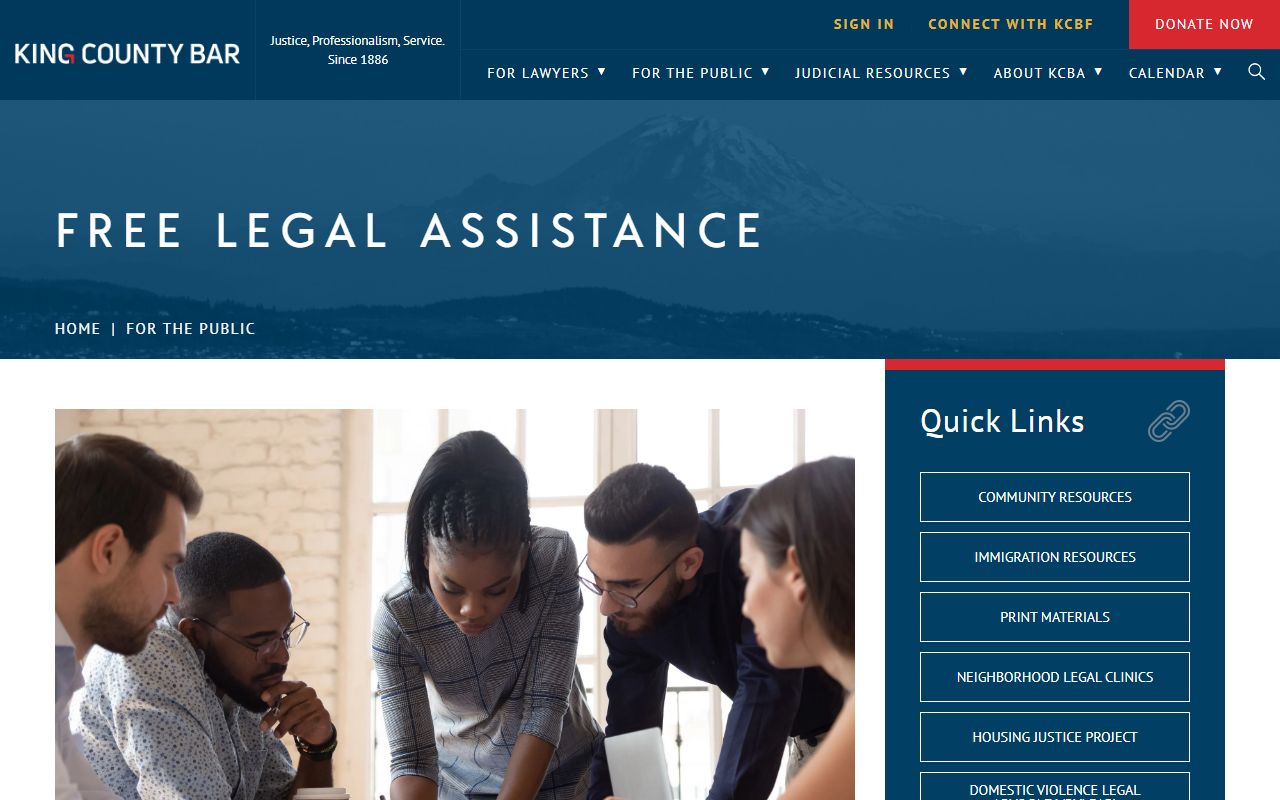
The KCBA runs one of the most active pro bono programs in Washington, with clinic locations throughout Seattle and surrounding communities.
The Northwest Justice Project at nwjustice.org provides free civil legal help to low-income people statewide, including bankruptcy matters. CLEAR, the coordinated legal aid intake line, can be reached at 888-201-1014. The Washington State Bar Association at wsba.org/for-the-public/find-legal-help runs a lawyer referral service and legal help directory. The Office of Civil Legal Aid at ocla.wa.gov can connect you with services in your area.
The U.S. Trustee Program for the Western District maintains an office in Seattle. The Trustee oversees bankruptcy case administration and handles complaints about fraud or misconduct. Contact them at (206) 553-2000. They do not provide legal advice to individual filers. Washington's Attorney General Consumer Protection Division at atg.wa.gov/consumer-protection, reached at 800-551-4636, handles complaints about predatory lenders and debt collectors.
Nearby Cities in King County
Seattle is surrounded by many other cities in King County. All of them also file bankruptcy cases through the Western District of Washington court in Seattle.